




- By: Admin
- Jun 26, 2026
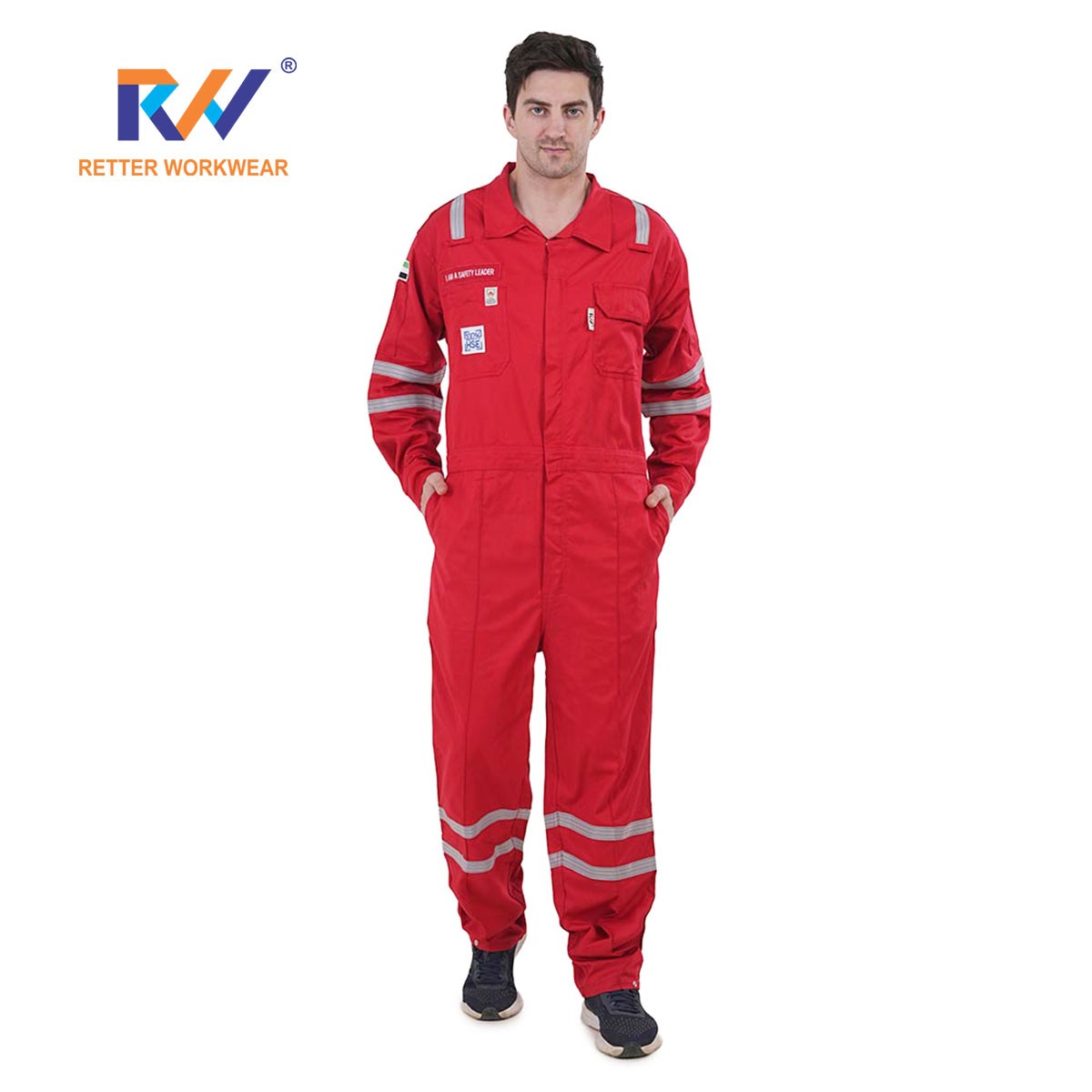
Few industrial environments carry the same flash-fire and arc-flash risk as oil and gas operations, where a single ignition event can change a worker's life in seconds. Retter Workwear as esteemed ADNOC Approved IFR Coveralls in UAE (also searched as ADNOC IFR Coverall Manufacturers UAE) builds protective garments engineered specifically for the compliance demands of ADNOC sites, refineries, and petrochemical facilities operating under some of the strictest safety expectations in the industry. This guide breaks down what genuine ADNOC compliance requires and what buyers should look for when sourcing inherently fire-resistant workwear for high-risk operations.
Why ADNOC Compliance Sets a Higher Bar Than Most Standards
Many international flame-resistant standards set a general baseline for protective clothing, but operations connected to ADNOC sites work within a far more specific and rigorous set of requirements. Manufacturers for ADNOC safety coveralls must demonstrate not only that their fabric meets recognized flame-resistance benchmarks, but also that every stage of production, from fibre selection to final stitching, aligns with the documentation and traceability ADNOC procurement teams expect. For safety officers and EPC companies bidding on ADNOC-linked contracts, this distinction matters enormously, since a coverall that passes a generic flame test does not automatically clear the bar required for approval on these specific sites.
NFPA 2112-Certified IFR Coveralls in UAE (the Gulf Benchmark for Flash-Fire Protection): The Certification Buyers Trust for High-Risk Fire Safety
Buyers across the Gulf increasingly look to one specific certification as their reference point when evaluating flame-resistant workwear. The NFPA 2112-Certified IFR Coveralls in UAE (the Gulf Benchmark for Flash-Fire Protection) have been tested against rigorous flash-fire simulation protocols that measure how quickly a fabric self-extinguishes, how much heat transfers through to the skin, and how the garment behaves under sudden, intense thermal exposure. Refineries and welding contractors operating in regions where flash-fire risk is a daily reality rely on this specific benchmark as their primary filter when shortlisting suppliers.
- Documented self-extinguishing time under controlled flash-fire conditions that meets the threshold required for worker survivability
- Measured heat transfer limits that confirm the fabric genuinely reduces burn injury risk rather than simply resisting ignition
- Consistency testing across multiple fabric samples to confirm the certified performance holds across an entire production run, not just a single test piece
The Fabric Science Behind Genuine Inherent Protection
The distinction between treated and inherently protective fabric matters more in flash-fire-prone environments than almost anywhere else in industrial PPE. The Inherently Flame-Resistant (IFR) Coveralls in Dubai/UAE (also Inherent Fire Retardant Coveralls Manufacturer Dubai) rely on fibres engineered at the molecular level to resist ignition, meaning the protection cannot wash out, wear off, or degrade the way a surface-applied flame retardant eventually does after repeated industrial laundering. Electrical contractors and manufacturing units running coveralls through frequent wash cycles depend specifically on this inherent quality to ensure protection on day five hundred matches protection on day one, without the slow, invisible degradation that treated fabrics often experience.
ADNOC Approved IFR Coveralls in UAE (ADNOC IFR Coverall Manufacturers UAE): Documentation Buyers Should Demand Before Purchase
A certificate alone does not guarantee that every batch of coveralls arriving on site matches the tested sample that earned that certificate in the first place. Genuine safety compliance requires a paper trail that connects raw fabric sourcing, dye-lot records, and batch-level testing all the way through to the finished garment delivered to a worksite. Industrial safety manufacturers representing these garments to end clients increasingly insist on this level of documentation, since their own reputation depends on the products they pass along performing exactly as promised.
- Batch-specific test reports rather than a single certificate representing the entire product line indefinitely
- Clear chain-of-custody documentation showing the fabric source remains consistent across repeat orders
- A supplier willing to share third-party audit results rather than relying solely on self-reported compliance claims
The Compliance Standard Every Gulf Worksite Deserves
Sourcing inherently fire-resistant workwear for ADNOC-linked operations is not a single transaction to tick off a procurement checklist. It is an ongoing assurance that every coverall delivered performs exactly as the original certified sample did, shift after shift, in the exact conditions where failure is not an option. For every safety officer reviewing supplier credentials, every procurement manager weighing certification claims against verified documentation, and every industrial safety distributor representing these garments across Gulf oil and gas operations: the right manufacturing partner is the one whose NFPA 2112 certification holds up to independent scrutiny, whose batch records trace cleanly from fibre to finished garment, and whose inherent flame resistance never quietly fades after the first hundred washes.
