




- By: Admin
- Jun 27, 2026
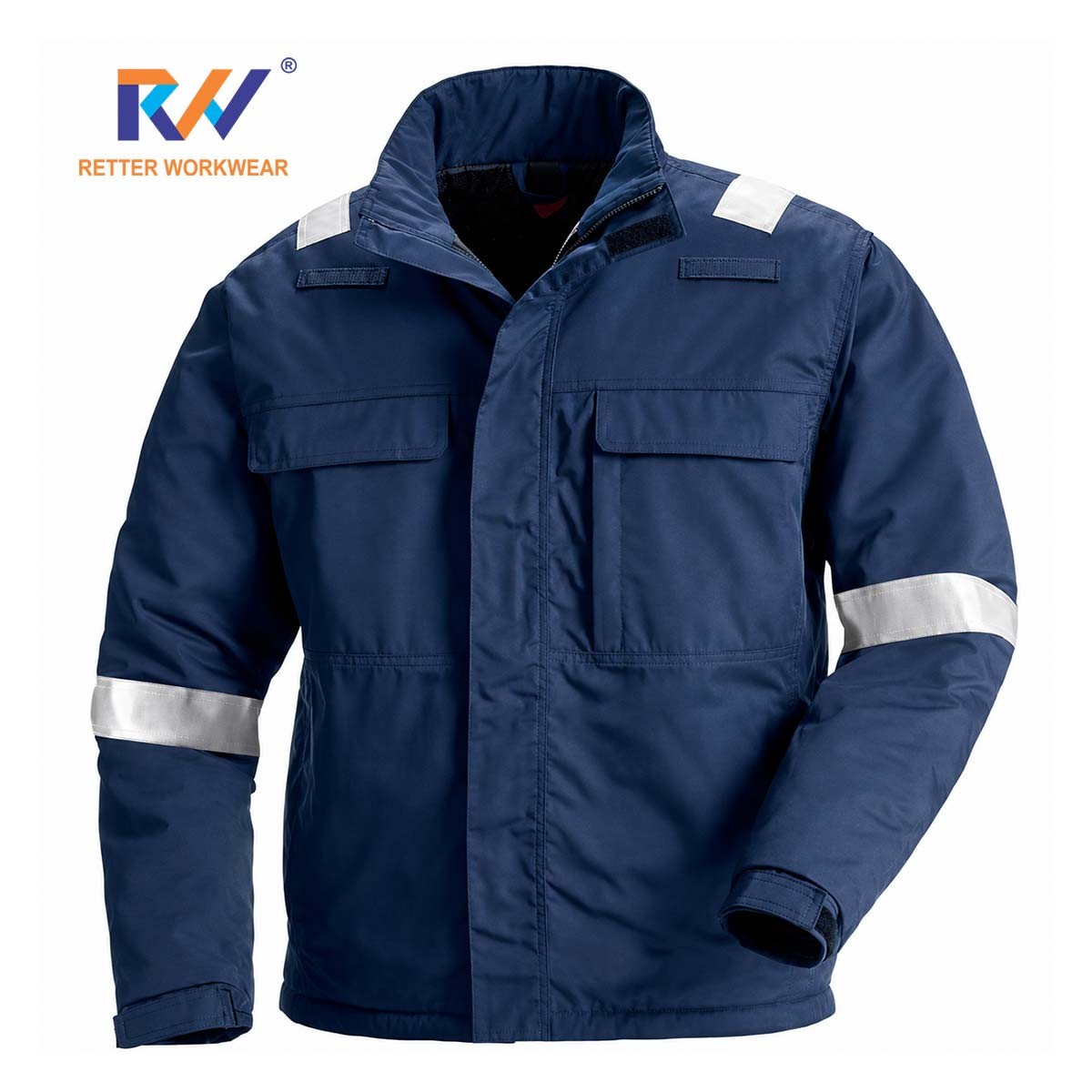
Cold-weather industrial sites present a problem most flame-resistant clothing was never designed to solve. A worker needs to stay warm through long, freezing shifts without sacrificing the flash-fire and arc protection their job demands. Retter Workwear as honored IFR Winter Jacket Manufacturers in India has extended that same certified flame-resistance expertise into cold-weather outerwear, building jackets for refineries, power plants, and oil and gas sites where sub-zero temperatures and ignition risk exist side by side. This guide breaks down what genuinely certified cold-weather protection requires and what buyers should expect from a manufacturer who understands both fabric science and freezing job sites.
Why Ordinary Winter Wear Fails on Industrial Sites
A standard insulated jacket bought off a general retail shelf was built to keep someone warm at a bus stop, not to survive a flash-fire event near a wellhead or refinery unit. An industrial winter safety jacket has to do two things simultaneously that ordinary cold-weather clothing was never asked to manage: retain body heat effectively in freezing conditions while maintaining the same flame-resistant integrity required on the rest of the site. Procurement teams at petrochemical plants and power plants have learned the hard way that swapping in a non-rated jacket during winter months, even temporarily, creates a dangerous gap in an otherwise compliant safety programme. The jacket a worker wears in January needs to meet the exact same ignition-risk standard as the coverall they wear in July.
Certified Cold-Weather FR Workwear: What Certification Actually Confirms in Cold Conditions
Flame-resistance testing conducted at room temperature does not automatically translate to reliable performance in freezing field conditions, which is exactly why buyers need to look closely at how a garment was actually tested. The Certified Cold-Weather FR Workwear has been evaluated not just for ignition resistance but for how that resistance holds up when the fabric and any insulating layers beneath it are exposed to genuine low-temperature conditions. Companies operating in harsh winter rely on this layered certification approach, since a jacket that loses its protective properties the moment insulation is added defeats the entire purpose of the garment.
Three things this kind of certification should specifically confirm before a jacket reaches a worksite include:
- Flame-resistance performance verified across the actual temperature range the garment will be worn in, not just standard lab conditions
- Insulation materials confirmed not to compromise the outer fabric's self-extinguishing properties under flash exposure
- Seam and closure testing that accounts for the additional bulk and layering typical of winter workwear
Thermal IFR Winter Jacket Manufacturers in India: How Insulation and Inherent Protection Work Together
The biggest engineering challenge in this category lies in combining genuine warmth with fabric that resists ignition at a fibre level rather than through a surface coating. Thermal IFR jacket manufacturers address this by selecting insulation materials that are themselves flame-resistant and pairing them with an inherently protective outer shell, so neither layer becomes the weak point that compromises the other. Electrical contractors and welding contractors working through winter months depend on this combination holding up across an entire cold season, not just the first few wears.
Three considerations that matter when evaluating this kind of layered construction include:
- Insulation fill that maintains its flame-resistant properties even when compressed or exposed to repeated industrial washing
- Outer shell fabric where the flame resistance is woven into the fibre itself, ensuring it cannot wash out over the jacket's working life
- Lining and insulation seams constructed to avoid creating air gaps that could allow heat or flame to reach the wearer's skin more quickly
Why Buyers Across Sectors Are Standardizing Their Winter PPE
Cold-weather safety planning has become far more strategic in industrial procurement than it was a few years ago. Many industrial safety distributors now treat Flame Resistant Winter Jackets for Industrial Use as a standing line item in their annual procurement planning rather than a seasonal afterthought purchased in a rush each year. Manufacturing units and refineries operating across regions with genuine winter conditions have learned that sourcing compliant cold-weather gear well ahead of the season, from a manufacturer who can document both flame-resistance and thermal performance, avoids the scramble that comes with discovering a gap in coverage once temperatures have already dropped.
The Cold-Weather Standard Worth Holding Every Supplier To
Certified cold-weather flame-resistant workwear is not a seasonal convenience purchase. It is a continuation of the same safety commitment a workforce relies on every other month of the year, adapted to conditions where warmth and protection both have to hold simultaneously. For every safety officer reviewing winter PPE options, every procurement manager planning ahead of a cold season, and every industrial safety distributor representing these jackets to oil and gas, mining, and refinery clients: the right manufacturer is the one whose flame-resistant fibres stay protective at sub-zero temperatures, whose insulation never compromises the outer shell's ignition resistance, and whose certification accounts for winter conditions rather than assuming a standard lab test tells the whole story.
