




- By: Admin
- Jun 24, 2026
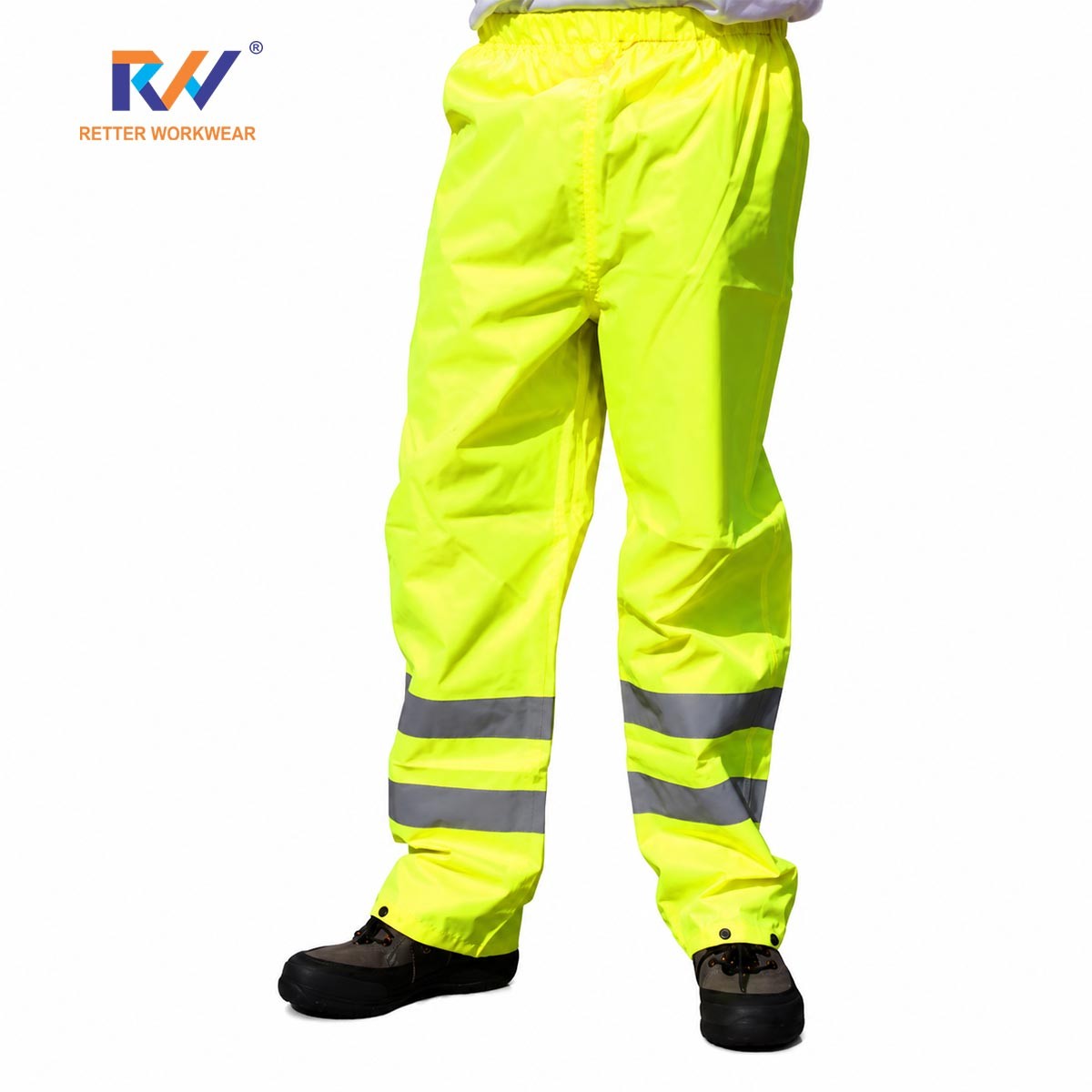
Workers spending long shifts on industrial sites need protective wear that holds up below the waist just as reliably as it does above it. A high visibility shirt loses much of its value if the trousers underneath fade, tear, or fail to meet the same reflective standard. Retter Workwear as reputed High Visibility Trousers Manufacturers in Australia builds garments specifically for the demands of refineries, mining sites, and power plants, where full-body visibility and durability are equally non-negotiable. This guide walks through what compliant, durable HiVis trousers actually require and what buyers should expect from a serious manufacturing partner.
What Genuine Durability Looks Like in Daily Industrial Use
A pair of trousers that looks compliant on day one but tears at the knee within a few weeks of heavy use is not delivering real value to the workforce wearing it. Manufacturers providing reliable protective work pants understand that industrial trousers face a very different set of stresses than ordinary workwear, from repeated kneeling and crawling to abrasive contact with rough surfaces and equipment. Mining companies and welding contractors, whose workers spend entire shifts kneeling, climbing, and moving through rough terrain, depend on this kind of durability holding up well beyond the first few weeks of wear.
- Reinforced stitching at high-stress points like the knees, seat, and pocket seams that resist tearing under repeated movement
- Fabric weight and weave selected specifically to withstand abrasion from concrete, metal, and rough industrial surfaces
- Reflective tape positioned and secured in a way that survives the same physical wear the surrounding fabric is built to handle
Hi-Vis Work Trousers in Australia: Lower-Body Visibility Cannot Be an Afterthought
Many buyers focus heavily on visibility at chest and shoulder height, assuming that trousers play a secondary role in overall worker safety. That assumption overlooks how often a worker's legs are the first thing visible to an approaching vehicle or moving machinery, particularly when they are crouched, kneeling, or working close to the ground. The Hi-Vis Work Trousers in Australia built to genuine compliance standards carry the same reflective tape placement, brightness retention, and fabric durability requirements as the shirts worn above them, ensuring visibility holds consistently across a worker's entire silhouette. Procurement teams at petrochemical plants and EPC companies increasingly treat trousers as equally critical to a visibility strategy, not a lower-priority component purchased separately from the rest of the uniform.
High Visibility Trousers Manufacturers in Australia: The Manufacturing Process Behind the Garment Matters
A trouser that performs well in a single sample does not guarantee that an entire bulk order will perform the same way once distributed across a large workforce. Heavy duty safety trousers manufacturing that holds up to scrutiny involves consistent fabric sourcing, dye-lot control and quality checks applied at every stage of production, not just a final inspection before shipping. Buyers across manufacturing units and industrial safety distributors increasingly ask suppliers to document this process in detail, since a manufacturer who can trace quality from raw fabric to finished garment offers far more confidence than one relying on a single showroom sample to represent an entire order.
- A single high-performing sample means little if bulk production cannot maintain the same standard consistently.
- Reliable manufacturing depends on disciplined control over materials, dye consistency, and stage-wise inspections.
- End-to-end quality traceability gives buyers confidence that every trouser will perform as promised on-site.
Matching Trousers to the Specific Hazards of the Worksite
Not every industrial site presents the same risks, and trousers built for one environment do not always translate well to another. The Safety Trousers for Industrial Workers in Australia at oil and gas sites, for instance, often need to combine high visibility with flame resistance, while those used in general manufacturing units may prioritize abrasion resistance and freedom of movement over flame protection. Electrical contractors and power plant workers, who often face very specific combinations of hazards, benefit significantly from trousers selected with their exact worksite risks in mind rather than a generic, one-size-fits-all approach.
- Identifying whether flame resistance, chemical resistance, or pure abrasion durability is the primary hazard the workforce faces
- Confirming that reflective elements meet the visibility standard required for the specific lighting and traffic conditions on site
- Selecting a fit and fabric weight appropriate for the climate and physical demands of the role, since overly heavy fabric in hot conditions can reduce compliance through worker discomfort
The Standard Every Pair Should Be Held To
Compliant, durable high visibility trousers are not a single transaction. They represent an ongoing relationship with a manufacturer who understands fabric resilience, hazard-specific design, and the physical realities of industrial work.
For every safety officer comparing suppliers, every procurement manager weighing cost against genuine protection, and every industrial safety distributor representing these garments to end users: the right manufacturing partner is the one whose stitching holds at the knee after months of hard use, whose reflective tape stays bright through every wash, and whose process can be traced from raw fabric to finished trouser without a single unanswered question.
