




- By: Admin
- Sep 16, 2026
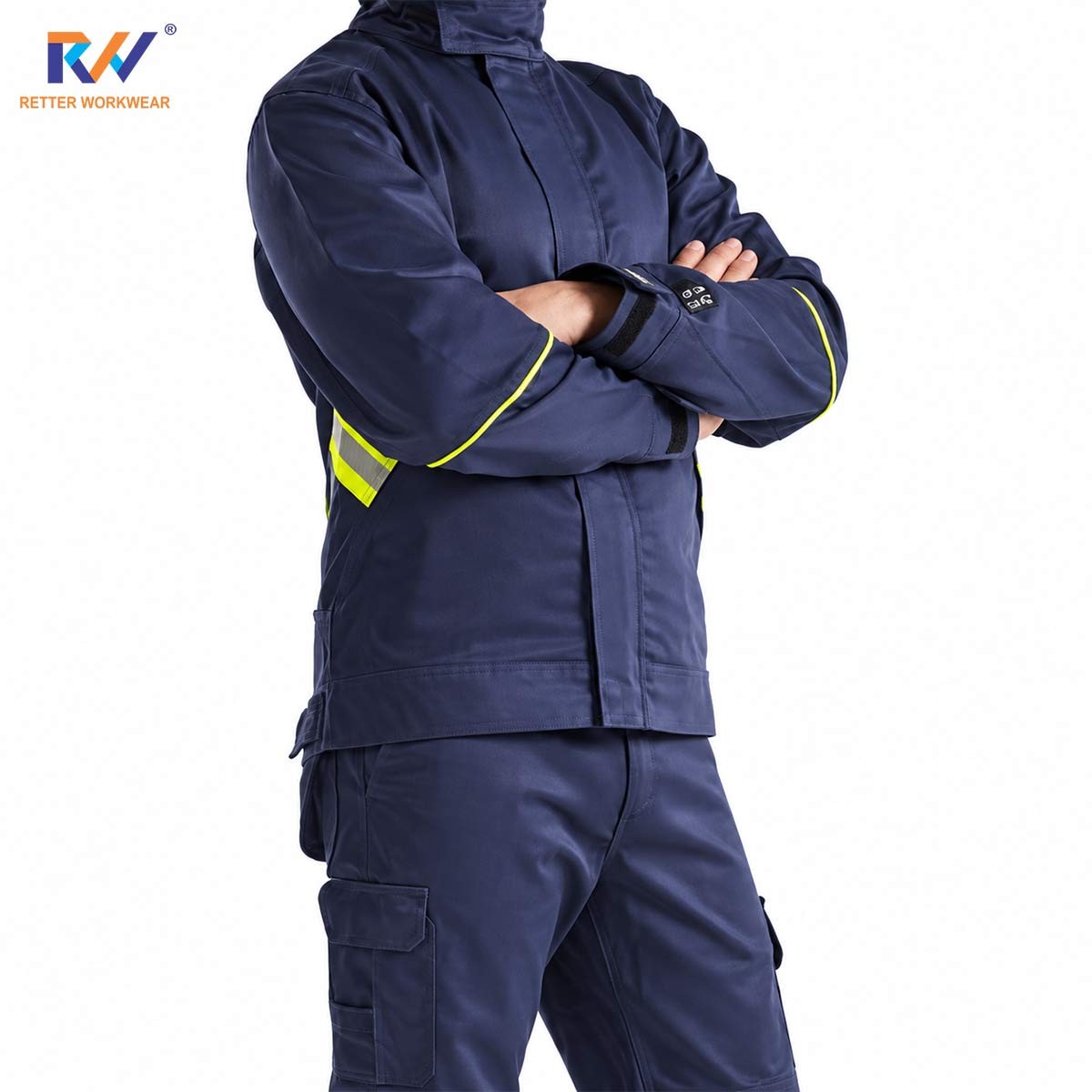
A spark landed on a welder's sleeve one afternoon, and the fabric didn't ignite; it just charred slightly and stopped. That single moment convinced his supervisor to rethink every gear order going forward. Workshops dealing with this kind of risk usually end up sourcing proper Welding Jackets from a manufacturer like Retter Workwear, once fire resistance actually becomes non-negotiable. Getting this decision right isn't about ticking a compliance box; it's about someone walking away from a spark that could've gone very differently.
Why Regular Fabric Fails the Moment Sparks Start Flying
Standard work jackets weren't built to handle molten metal spatter or direct spark exposure at all. Cotton blends and synthetic fabrics can ignite or melt onto skin within seconds of contact. Welders working close to their material need something that resists ignition, not just something that looks tough. A jacket that catches fire mid-shift turns a routine task into an emergency nobody wants to manage.
What Actually Determines Whether a Jacket Protects or Fails
Not every jacket marketed as protective actually performs the same way under real welding conditions. Some manufacturers cut corners on fabric treatment just to hit a lower price point.
- Fabric treated specifically to resist ignition from sparks and spatter
- Seams reinforced with fire-resistant thread, not standard stitching
- Sleeves long enough to cover wrists during overhead or awkward welding
- Collar height that protects the neck without restricting head movement
- Material that stays flexible even after repeated heat exposure
Skipping this check often means discovering a jacket's real limits during an actual incident, not before one.
The Difference Between Flame-Resistant and Genuinely Fire-Retardant
People often use these terms interchangeably, but they describe different levels of protection entirely. A Fire Retardant Jacketstandard typically requires fabric that self-extinguishes rather than just resisting ignition briefly. That distinction matters most in environments involving sustained exposure, not just occasional stray sparks. A jacket that merely slows ignition isn't the same as one engineered to stop burning once contact ends.
Heat Buildup Is a Real Problem Nobody Talks About Enough
Fire-resistant fabric tends to trap heat more than lighter, breathable materials do by design. Welders working long shifts in hot environments sometimes overheat before any spark ever becomes an issue. A jacket that protects against fire but causes heat exhaustion isn't actually solving the full problem. A FR Welding Jacket Australia who understand this builds in ventilation panels that don't compromise the fabric's protective rating.
Getting Sizing Right Without Sacrificing Mobility
A jacket too loose can catch on equipment during overhead or confined-space welding work. One too tight restricts the arm movement welders need for precise, controlled work. Getting this balance right across a diverse crew takes more thought than ordering a single standard size for everyone. Manufacturers who test fit across different builds tend to produce Welding Jackets that protect without slowing anyone down.
Building a Replacement Schedule Instead of Waiting for Failure
Fire-resistant treatments wear down gradually with repeated washing and heat exposure over time. A jacket that protected well six months ago might not perform the same way today without anyone noticing the decline. Facilities that check fabric condition on a set schedule catch this before it becomes a genuine safety gap. Waiting until a jacket visibly fails usually means discovering the problem during an actual welding incident.
A few habits worth building into a regular gear review:
- Checking fabric for stiffness or brittleness after repeated washing
- Inspecting seams and cuffs for fraying near high-stress points
- Comparing jacket performance against original fire-resistance ratings
- Rotating gear so no single jacket takes on excessive wear alone
- Documenting replacement dates to avoid relying on visible damage alone
Facilities that build this habit spend less on emergency replacements and keep welders consistently protected.
Final Thoughts
Protective gear in a welding environment only works if it actually holds up under real conditions, not just on a spec sheet. Workshops that invest in properly rated, well-fitted jackets tend to see fewer close calls and fewer excuses for skipping proper gear. A jacket that quietly does its job through a demanding shift rarely gets noticed, but everyone feels the difference the moment cheap gear fails. Getting this right protects both the people welding and the operation depending on them every single day.
